Tuesday, 31 March 2020

THE DIRE NEED FOR VITAMIN D


Warm Greetings!

In the midst of the Coronavirus pandemic that has affected the health of people gravely, I would like to bring your attention to a probable treatment method that would strengthen our immune system and indirectly help us fight this deadly virus.

Yes, I did mention in my last blog that viruses cannot be killed but we can definitely take steps to build our immunity towards tolerating these pathogenic strains. In this article, I would discuss one of the most potent and essential vitamins that we have free access to – Vitamin D.

Even though we have a significant prevalence of sunshine, especially in Mumbai, more than half of the population is Vitamin D deficient or insufficient. How can this be even remotely possible? The reason behind this is that there is more to Vitamin D synthesis and absorption that we all fail to consider.

Vitamin D, also known as Cholecalciferol, is more of a steroid hormone for our bodies. The body can either synthesize it by utilizing the rays of the sun or it can absorb it from our dietary food sources.

SYNTHESIS OF VITAMIN D FROM THE SUN:

There are two types of Vitamin D – Vitamin D2 (Ergocalciferol) and Vitamin D3 (Cholecalciferol). Both of these forms are inactive and need activation by the Liver and the Kidneys respectively. Vitamin D2 is synthesized in certain yeast and fungi, whereas Vitamin D3 is synthesized in animals like fish, humans etc.

Whenever we expose ourselves to the Sunlight, the Ultraviolet (UV)-B radiation that falls in the 290-315 nm of wavelength, undergoes a phytochemical reaction with 7-dehydrocholesterol on our skin. The UV-B from the Sun reacts with cholesterol/fat on our skin to synthesize a stable yet inactive Vitamin D3 within our bodies.

This inactive vitamin D3 is attached to a Vitamin D binding protein (DBP) and sent to the Liver for its first stage activation. In the Liver, a certain enzyme called as Vitamin D 25- hydroxylase adds a hydroxyl group (OH) to the inactive Vitamin D3 to form 25 (OH) Vitamin D or 25(OH)D. 25(OH)D in the Liver is used as a biomarker for checking Vitamin D status in humans.

25(OH)D is further hydroxylated in the Kidneys by the enzyme 1-α-hydroxylase to synthesize the active form of Vitamin D known as 1,25 Dihydroxy Vitamin D or 1,25(OH)2D.

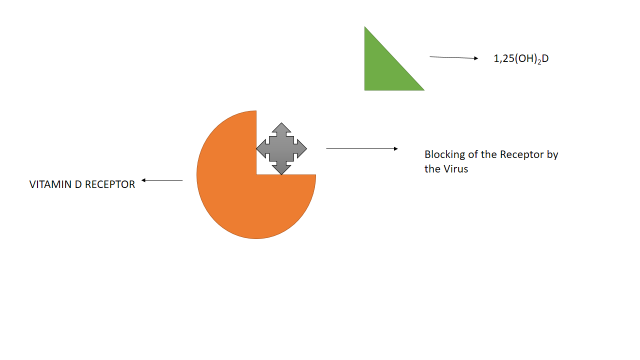
This active form of Vitamin D then binds to specific receptors known as Vitamin D receptor or VDR. This complex then further binds to Retinoid-X-receptor to form a heterodimer (A dimer of two different proteins)


I know this seems highly technical but that’s how the body works. In order to isolate the vital information, we have the following factors that affect levels of Vitamin D;

  • Vitamin D synthesis from UV-B radiation from the Sun requires the presence of Cholesterol on our skin. A low fat diet would indirectly affect the cholesterol levels on the surface of the skin and prevent Vitamin D synthesis.
  • Dietary Vitamin D is a fat soluble vitamin which can be absorbed only in presence of Bile. Bile is a fat cleaving fluid which is produced by the gut microbes, Liver and stored in the Gall-bladder. A deficiency of Bile may lead to insufficient absorption of Vitamin D from the diet. 
  • Retinoid-X-receptor (RXR) is closely associated with Vitamin A and hence, Vitamin A levels affect Vitamin D levels. 
  • In order to activate Vitamin D, one must possess a healthy and functional Liver as well as kidneys. Any hindrance to the normal functioning of these organs would lead to less Vitamin D activation. 

FUNCTIONS OF VITAMIN D:

After going through the synthesis of Vitamin D, let us understand the following functions of Vitamin D;

  • Mineralization of the Bones: Vitamin D allows the absorption of Calcium (x20 times) and Phosphate in the small intestine from dietary sources. In order to drive this calcium into the bones and prevent any calcium accumulation in soft tissues or arteries, Vitamin D works with Vitamin K2 to balance out the excess calcium in the blood. 
  • Immune Modulator: Apart from bone strengthening, Vitamin D plays an extremely vital role in controlling our immune cells. All our immune cells like B-cells, T-cells, dendritic cells, and macrophages which act as body’s defence barrier against foreign pathogens are greatly influenced by Vitamin D mainly as these cells express the Vitamin D receptor.
    When a foreign antigen (microbe/virus/fungi) enters our body, the VDR-1,25(OH)2D-RXR complex binds to certain regions on our DNA (Genetic material) and expresses certain protein peptides like ‘Cathelocidin’ and ‘Beta-defensin 4’ which have the ability to kill the foreign body. Thus Vitamin D helps us protect against various pathogenic strains by modifying our immune cells. 
  • Anti-inflammatory Nature: Our immune system creates inflammation during the process of killing a pathogen. Inflammation is basically a hypersensitive reaction caused by influx of immune cells like White blood cells and increased blood flow to the area. This inflammation is taken care by Vitamin D which is known to have an anti-inflammatory nature. Thus, Vitamin D is known to improve the symptoms of Auto-immune diseases like Rheumatoid Arthritis, Diabetes Mellitus, Multiple Sclerosis etc.Because of such properties, Vitamin D also helps to improve high blood pressure and Asthma symptoms.
  • Bone Cell Development: As vitamin D helps in calcium absorption, it also affects the development of Osteoclasts within our bones. Osteoclasts are basically cells that utilise the calcium and reshape bones. Thus a deficiency of Vitamin D would lead to poor bone development and a poor posture of the skeletal framework.
  • Anti-Viral Nature: Since Vitamin D has a strong control over the immune system, there have been studies of viruses involved in blocking the Vitamin D receptor. This allows the virus to override our immune barrier and hijack our cellular machinery.
  • Mood and Sleep Booster: Vitamin D decreases the nervous tension and helps one calm down.
    In addition to all these functions, Vitamin D receptors are widely present in Intestine, pancreatic beta cells, tubular kidney cells, bronchial epithelial cells, reproductive cells as well as breast tissue, thus portraying wide applications to various organs.


    REQUIREMENTS & SOURCES OF VITAMIN D:
    The recommended dietary allowance (RDA) of Vitamin D is in the range of 400-800 IU (International Units). Before we go any further, let’s just understand the relationship between IUs and grams.

    1 IU of Vitamin D = 0.025 mcg (micrograms)

    800 IU of Vitamin D = 20 mcg

    The RDAs for Vitamin D are selected based on preventing a disorder from its deficiency like Rickets. Rickets is a condition of Vitamin D deficiency whereby the bones become fragile and start bending.

    In order to maintain a healthy body, one must expose to much more Vitamin D. For example, every 10 minutes spent under the sun at midday would provide 10,000 IUs of Vitamin D. For those who think such a number is outrageous, let’s convert it into micrograms.
    10,000 IU of Vitamin D = 250 mcg

    Thus the amount of Vitamin D obtained from the sun is really inexpensive but the positive effects are innumerable.

    But what about food sources? Well to be really honest, you won’t even get close to RDAs with dietary sources except Cod Liver Oil which has approximately 1360 IU of a single table spoon. 

    Other food sources that people consume for Vitamin D include Mushrooms, egg yolk, oysters, salmon, sardines, tuna etc. but hardly absorb any Vitamin D.

    In order to obtain maximum benefits of Vitamin D, one must expose 70% of the body surface under the midday sunlight for about 20-30 minutes. One must carefully monitor
    non-burning skin exposure to the sunlight as skin damage would lead to more health problems. 

    MYTH WRECKER, FACT CHECKER: (Myths are underlined, facts are italic)

  • Vitamin D falls from the sun onto our bodies. Contrary, our bodies synthesize it with the help of UV-B radiation and Cholesterol.
  • Sun-screens provide us protection from the Sun. It hinders the absorption and synthesis of Vitamin D, thus creating more problems. 
  • Sunlight gives you skin cancer. It does not unless you roast your skin under the sun. 
  • A fatty liver has no effect on Vitamin D. It would inhibit/prevent the conversion and activation of Vitamin D. 
  • Stress has no link to Vitamin D. High cortisol coming from chronic stress is known to inhibit Vitamin D synthesis. 
  • People exposing themselves to early morning sun get enough Vitamin D. NO! Early risers expose themselves to UV-A radiation which is harmful to the human body. Expose yourself to the midday or an hour before or after midday to absorb maximum UV-B radiation. 
  •  Our body would continuously produce Vitamin D under sun. It will buffer the amount required by your body and then stop immediately. 
  • Everyone can absorb Vitamin D equally. Thin people absorb Vitamin D more efficiently as compared to obese people.
  • Skin tone does not matter in Vitamin D absorption. Dark skinned people need 5 times the amount of Vitamin D as compared to light skinned people chiefly due to the higher melanin production in their skin.
I hope you guys understood everything I touched upon. I would expect you all to understand the relationship of Vitamin D with our immunity and apply this study to counter the current crisis we are facing with COVID-19 as well as to maintain health overall.

Stay safe and stay strong!

Warm Regards,

Mayur D. Chauhan


Wednesday, 4 March 2020

COVID 19

Warm Greetings!

In an already messed up health scenario, entry of a novel coronavirus in the past three months has been extremely dangerous globally. In this article, I would like to give a preview of what coronaviruses are and what makes COVID 19 so deadly as compared to other viruses. Before I begin, I would like to extend my deepest condolences to all the people who have lost their lives to this outbreak.

CRISIS:
COVID 19 which stands for ‘Corona Virus Disease’ has affected more than 90,000 people globally till date and more than 3200 people have lost their lives to it. The outbreak originated in the Hubei province of Wuhan, China and cases have been reported from 80 countries in the world.  In late December 2019, a cluster of pneumonia cases of unknown cause was reported by health authorities in Wuhan and the initial cases mostly had links to the ‘Huanan Seafood Wholesale Market’ which traces the origin of the virus to be zoonotic. Zoonotic is a term used to address diseases which are caused by either bacteria, viruses or parasites from animals to humans.

CORONAVIRUSES:
COVID 19 is caused by a virus from the family of Coronaviruses.  ‘Corona’ is a latin word which means a ‘crown or a halo’. This refers to the structure of a Coronavirus that looks like a crown because of its protein projections on the outer surface. Following is a photo of a coronavirus;


COVID 19 is caused by a novel coronavirus named as SARS-CoV-2, which is being added to the family but it is quite similar to the coronaviruses found in certain animals like Bats and Pangolins. Coronaviruses usually affect the upper respiratory tract of Humans and hence it is named as SARS-CoV-2. SARS stands for Severe Acute Respiratory Syndrome after a similar outbreak that happened in southern China in the year of 2002-2003 by SARS-CoV-1.


HOW DOES A VIRUS OPERATE?
Viruses, in general, are not living things. They just comprise of proteins and genetic material wrapped around a capsule. Viruses cannot replicate on their own and thus need a host (Humans/Animals) to amplify. Coronaviruses have a single stranded RNA as its genetic material accompanied by a number of surface proteins which help them to hijack our immune system and start proliferating by utilizing our own system.

Coronaviruses have a special Spike (S) protein on their surface which binds to a receptor on Angiotensin converting enzyme 2 (ACE2) that plays a vital role in our cardiac function.
So basically viruses tend to affect more in a weakened immune condition. According to China's National Health Commission, most of those who died were older patients – about 80% of deaths recorded were from those over the age of 60, and 75% had pre-existing health conditions including cardiovascular diseases and diabetes, thus confirming that viruses do affect more in a weaker immune resistance.

SYMPTOMS OF INFECTION:
The time period between infection and the actual onset of symptoms that show up is around 5-14 days. This time is actually an incubation period of the virus whereby the virus keeps on producing multiple copies of itself and spreads to different cells of the body.
Symptoms that show up are mainly fever, coughing, shortness of breath, sinus congestion, sore throat, muscle weakness and this can worsen further to cause pneumonia and other respiratory infections.

TRANSMISSION:
Coronaviruses are known to be transmitted through air via production of respiratory droplets. People who are infected might expel the virus through such droplets while coughing, sneezing or even talking. These droplets cannot stay much longer in the air but can settle on any type of surfaces. Coronaviruses are known to stay active on a metal, glass or plastic surface for 9 days at room temperature. Scary! Hence the surfaces should be disinfected by 60-70% Ethanol or 0.5% hydrogen peroxide.


PREVENTION:
You must be thinking why I am suggesting preventive measures when I can just reveal a cure for COVID 19. Unfortunately there isn’t any cure as we cannot kill something that isn’t alive in the first place. Apart from this, there are no anti-viral drugs or vaccines against this novel coronavirus yet. The only path of putting the virus back into remission is to adopt healthy practices to strengthen the immune system along with certain precautions to prevent transmission of the virus unintentionally.

MAINTAINING HYGEINE AT ALL TIMES:
In order to prevent further transmission of the virus, one must follow hygienic practices like Hand washing with an alcohol based solvent. People should not touch their eyes, nose or mouth with unwashed hands as it might lead to infection.

People should be wearing Face masks to prevent inhalation of infected droplets in the environment. Face masks are of two main types and based upon the area you live in, you must go for a designated face mask accordingly,

    a)     Surgical Mask – A surgical mask is a disposable medical device that can be bought in pharmacy and that protects against infectious agents transmitted by “droplets.” These droplets can be droplets of saliva or secretions from the upper respiratory tract when the wearer exhales. These masks should not be worn for more than 3 to 8 hours.

But a surgical mask does not protect against “airborne” infectious agents so it will not prevent the wearer from being potentially contaminated by a virus such as the coronavirus.

   b)     Respirator - A respirator is personal protective equipment that prevents the wearer from inhaling aerosols (dust, smoke, mist) as well as vapours or gases (disinfectants, anaesthetic gases) that are health hazards. Unavailable in pharmacy, it protects the wearer from airborne infectious agents i.e. against contamination by a virus such as coronavirus, SARS, H1N1, etc. Example of a respirator would be an N95 respirator.

DIETARY GUIDELINES:
Whenever a virus tries to take over our system, it has to go through our immune cells’ defence mechanism. Viruses try to block Vitamin D receptors (VDR) which is present majorly in our immune cells.

Vitamin D helps in strengthening of our immunity and if one has already low levels of Vitamin D, that person is more susceptible to viral as well as bacterial infections. The RDA levels of Vitamin D per day is just 400-800 IU’s which is way too low for building up any resistance against pathogens. One must go under the sun and get non-burning skin exposure for about 15 minutes and it would provide 20,000 IU’s of Vitamin D. Vitamin D is also anti-viral in nature so it would put the viruses in remission for years.

Consuming certain anti-viral nutrients like Vitamin D, Garlic, Zinc, Monolaurin (an extract from Coconut oil), Selenium (high in Brazil nuts), Oregano, Olive leaf extract, Curcumin, Licorice root, Vitamin E, Fulvic acid and many more would allow oneself to put the viruses into a latent state.

Lastly, there is a strong link between the rates of flu virus with the amount of glucose uptake by the cells. There is a direct relationship between glucose and prolong infection of viruses. If a person stops consuming huge amounts of refined carbohydrates and focuses purely on the above phytonutrients, the viruses would be put into remission.

So I hope I’ve explained the mechanism of action of coronaviruses well and how grave it can be for a person to get infected. Kindly share the information that I’ve shared within your community and friends and let us hope this public emergency gets under control soon.

Thanking You.

Saturday, 14 September 2019

Healthy Ketosis & Intermittent Fasting for Diabetes

Warm Greetings !!

Human Body maintains a Blood sugar level at a constant value of 90-100mg/dl. Alterations in this number leads to the following interpretations,

FASTING GLUCOSE VALUES
CONCLUSION
>126 mg/dl
Diabetes (Hyperglycemia)
110-125 mg/dl
Pre-Diabetes (Insulin Resistance)
100-110 mg/dl
Concern (Gray Area)
80-90 mg/dl or less
Normal

Insulin is a dominant hormone produced by β-cells of Pancreas. When we eat any type of Carbohydrates (Sugars) or Proteins, we raise our blood sugars significantly. This triggers the release of Insulin, which binds to the excess Glucose and undergoes either of the three fates:
  • Glucose can be used as an Instant Fuel by the Body.
  •  If the body does not require it as fuel for the time being, Insulin will store the excess  Glucose as Glycogen in the Liver and Muscles for future use. But this storage requires an important electrolyte known as Potassium. Potassium is an electrically charged mineral which is required in huge amounts (4700mg) by the body.
  • Since many people don’t have the said availability of Potassium reserves, the sugar is neither used as fuel nor stored as Glycogen. Lastly, all of the sugar is converted to FAT & CHOLESTEROL.

This is more dangerous than it actually looks. Every time we eat, Insulin is triggered and a similar vicious cycle keeps occurring until the Liver stops accepting Insulin. Frequent insulin interaction makes the Insulin receptors on the Liver become resistant over years of carbohydrate (sugar) abuse. This condition is termed as Insulin Resistance.

It does not stop here, it becomes progressively worse. Since Insulin does not reach its destination (Liver) and the Blood glucose levels are high, there is no return communication back to the pancreas. Pancreas think that it has not produced significant amount of Insulin to control the blood sugar situation. So the β-cells pump out more insulin but all in vain, as the Liver is not accepting Insulin in the first place.    

Because of this phenomenon, Diabetes is further classified into two types:
   a)   Type II Diabetes – It’s a similar condition mentioned above in which the β-cells of Pancreas are pumping out Insulin but it is not accepted by the Liver. Thus Pre-diabetes or Insulin resistance has now resulted in Diabetes where the Blood sugars are always high. Medicines are designed either to Boost more insulin production (Sulfonylurea) or improving the receptivity of Insulin by making it more sensitive (Metformin)
                                                   
   b)    Type I Diabetes – It’s a condition in which the β-cells have been completely exhausted and they no longer produce Insulin. It is a highly fatal condition.
Why we are so much obsessed with Insulin? Because as I mentioned earlier, Insulin is a dominant hormone which also acts as a key to the door of our body cells. Without Insulin, neither glucose nor amino acids, minerals or vitamins are able to enter the cells. Absence of Insulin starves us of nutrients at the cellular level.

Higher levels of Insulin in the blood leads to some serious inflammation on tissues and organs.

So what can we do about it? Diabetes is curable at the very beginning itself. Let us focus on the How’s and the What’s of the puzzle.

As discussed, Insulin is triggered when we eat in general. But what if we don’t eat anything? I know that’s not even remotely possible, because we’ve been taught that we need ‘Glucose’ as our energy fuel to run our brains efficiently. What if I tell you, we’ve been taught wrong? I know you won’t believe but give me an opportunity to convince you.

There is a term called as ‘Essential’ which simply means that we need certain things from the Diet only as our bodies cannot synthesize them. For example, we have essential amino acids (Proteins) and essential fatty acids (Fats) but surprisingly we do not have a term known as Essential Carbohydrates (Sugars). What does this imply? We don’t need glucose as our primary energy fuel.

We can run our bodies on fat fuel that we’ve been storing all our lives in our belly. So the moment Fat is mentioned, many of us link cardiovascular problems like Heart attacks due to high calories associated with fatty foods. Proteins and Carbohydrates/Sugars have 4 Calories/gram whereas Fats have a whopping 9 Calories/gram. But surprisingly, fatty foods have negligible effect on Insulin release and thus zero effect on Blood sugars.

Upon reducing (<25-50 gms) or negating refined carbohydrates (sugars) from the Diet, the body taps into Fatty acids for a much more efficient fuel source. Ketone, a by-product of fatty acids, is formed and utilized by the Brain as well as other body organs. This process is termed as Ketosis.

Now the quickest question that pops up is - How will we maintain our Blood Sugars if we don’t provide the sugar it needs? The answer is very simple. As I mentioned earlier, the body does not depend upon external sugar at all. It can maintain the blood sugars by breaking down proteins or fats (Non-carbohydrate sources) into Glucose by a process called as Gluconeogenesis. Limiting carbohydrates will take care of the high insulin situation of a person suffering from Diabetes.

Since we are trained in eating sugars since the beginning, it will take a valuable amount of time in adapting to Ketosis. Thus there are certain steps that need to be taken apart from just Carb-limitation. They are as follows,


a)  Increasing the consumption of Vegetables (7-10 Cups per day): Vegetables belonging to the cruciferous family eg. Kale, Broccoli, Cabbage, Cauliflower, Asparagus, Brussel sprouts etc. are highly nutritious as they have anti-cancer and anti-toxic properties. You can either juice them or lightly steam them to keep all the nutrients intact. Vegetables give you plenty of Potassium and other minerals which allow better Insulin receptivity in our cells. Ketosis with enough nutrient dense vegetables is termed as Healthy Ketosis.

b) Avoiding Hidden Sugars: Refined Grains (Rice/Dal/Rotis), breads, pasta, cereal, crackers, biscuits, waffles, pancakes, muffins, soda, sugar-alcohols as in Diet-free foods etc. are all high on the Glycemic Index (GI). GI indicates the rate at which a food turns into sugar in the blood. 

c) Moderate amount of Proteins: Proteins provide the building blocks known as amino acids. One must consume not more than 3-6 ounces of proteins per day. Whole eggs, cottage cheese (Paneer) are some wonderful sources of proteins. One must not overdo on proteins as excessive amounts get converted to Sugar which we are trying to curb.

d) Fasting Intermittently: Usually people suffering from blood sugar issues are told to eat at an interval of 2 hours. This keeps on releasing Insulin constantly thus affecting the blood sugars continuously. Well, one should listen to their bodies. We need to identify our hunger and stick to that pattern of eating. Starting with three meals per day, an individual should gradually make their way up to two meals or one meal a day (OMAD). Intermittent fasting, when done correctly, promotes Autophagy which involves self-cleaning of old proteins and recycling them. Intermittent fasting induces growth hormone which is extremely anti-ageing in nature and it protects the muscle mass too.

e) Understanding the difference between Fasting and Starvation: We must make sure that we do not starve at any point during this diet. Pushing oneself when hungry by either drinking water or just starving will force the body to break down muscle proteins to satisfy itself and maintain the blood sugars accordingly.

f)  Consuming Healthy Fats: Since fatty foods do not trigger insulin, one should consume saturated fats at the end of the meal in order to go longer between meals. Certain fats like Avocados, butter, cheese, ghee provide copious amounts of fat soluble vitamins (A, D, E, K1, K2 ). A majority of population fear consuming fats as they don’t want to Die. We’ve been following so many things blindly and I hate to inform you that 75% of Cholesterol within our bodies is made by our Body for synthesizing Stress and Sex hormones. It is the sugar that gets converted to Cholesterol faster than the actual fat consumed.

g) Apart from the macro nutrients, one must focus on the trace minerals and vitamins too. B-vitamins and Vitamin C are water soluble and may be obtained from Green leafy vegetables and lemons respectively. 

h) Acidity of the stomach: A majority of symptoms like burping, belching, bloating and Acid re-flux are caused chiefly by low stomach acids. Low stomach acids decrease the breakdown of proteins and prevent proper absorption. Certain acidifiers like Apple Cider Vinegar should be consumed before each meal to maintain proper digestion.

i) Omega – 3 fatty acids: These are the most essential fatty acids which maintain the hydration of the skin, maintains good vision etc. Flax seeds and hemp seeds have significant amounts of Omega 3-fatty acids which have anti-inflammatory properties.

j) Hydration with Water: I don’t know who started this but we are not supposed to drink 8 glasses of water every day as an obligation. Our bodies don’t have just water, it has minerals and electrolytes mixed together. Drinking tons of water flushes out the nutrients and surprisingly, we become dehydrated in process of hydration. We should drink water only when thirsty and always add natural electrolytes (Lemon, Sea salt) with it to replace any lost mineral reserves.

Thus healthy ketosis and intermittent fasting improves the very cause of Diabetes – Insulin resistance.

In Type 1 diabetes, people do not synthesize Insulin and they misunderstand this diet in causing Ketoacidosis.

Ketoacidosis is a condition where the ketone bodies make the blood acidic. But this is a rare case as Insulin is present in minute amounts always. In addition to this, vegetables will alkalize the acidity produced by these Ketone Bodies.  

High levels of glucose can damage the retina and throw the brain off by providing temporary fuel refills. Following healthy Ketosis and intermittent fasting can greatly help people suffering from Diabetes.


Wednesday, 13 March 2019

The 'pH' Dilemma

Warm Greetings!

I know this topic sounds quite chemical, but it has a crucial link to our bodily fluids. We’ve all been through certain digestive problems like a Heartburn, production of Gas and most commonly Indigestion. And what do we all say in unison? ACIDITY!

Now we clearly have been taught this and our brain automatically presents the word Acidity. So without giving it much thought, we start taking Anti-acids which are really common nowadays. As the name suggests, Anti- acid medication will reduce the acid in the stomach and we feel accomplished thinking acid was the culprit. But little do we know, such an approach is making us extremely deficient nutritionally.

Before I explain the nutrition part, let me give a brief explanation about what pH actually means.

‘p’ stands for Potenz or Concentration.
‘H’ stands for Hydrogen Ion (H+)

Therefore pH is the concentration of H+ ions in a fluid. It is given by the logarithmic equation,
pH = -log10[H+]                       …….. (I)

pH has a scale of 0-14 with 7 as the midpoint for dividing two classes of pH:
So if the pH of any given fluid is between 0-6, it would be considered an ‘Acidic’ fluid. If the pH of any fluid ranges from 8-14, it would be considered an ‘Alkaline’ fluid. A pH of 7 is considered Neutral!

What are Acids and Bases? And why Acid gets to be on the Top? Do Acids have good networks in the pH scale?

All these important questions are answered by equation (I). An acid would have maximum concentration of Hydrogen ions (H+) and are capable of donating them.

A Base / Alkali has maximum concentration of Hydroxyl ions (OH-) which are capable of accepting these donated H+ ions.    

SOLUTION
IONS
pH RANGE
ACID
H+
0-6
BASE
OH-
8-14

So when acids and bases are present in equilibrium, the H+ ions gets balanced by his brother OH- ions and we have a Neutral fluid.

H+ + OH- → H2O
ACID + BASE → WATER

In our body, every fluid in different organs has its own pH thus belonging to either of the three categories. Every food we consume has a pH value which needs to be specific with our organelle pH. Let us consider a few examples,

FLUID
pH RANGE
TYPE
Blood
7.35-7.45
Alkaline
Stomach
1-3
Extremely Acidic
Cerebrospinal Fluid (CSF) in Brain
7.5
Alkaline
Lemon Juice
2-3
Extremely Acidic
Vinegar
2
Extremely Acidic
Urine, Sweat, Adrenal Glands, Colon (Large Intestine)
0-6
Acidic
Fluid Inside and Outside of Cells, Tears, Bile
8-14
Alkaline
Water
7
Neutral

You might think what’s the big deal with pH? If we consume some acidic foods, we can push in some alkaline foods to neutralize it. No dear, it doesn’t work that way. Look at Equation [I] again,

Do you see the number 10? It is there for a reason, not just to look good. pH values are divided exponentially i.e. A pH value of 5 is 10x times more acidic than 6, but a pH value of 4 is 100x more acidic than 6 and so on.

Let us consider our Blood pH which is Alkaline in nature in a very specific range of 7.35 - 7.45. If the blood pH drops by 1 whole number, a person would go into a diabetic coma. That’s how serious the concept of pH is!

Maintaining a specific pH in a specific body fluid is of utmost importance. If we closely look at our stomach pH, it ranges from 1-3 which is extremely acidic. This strong pH is mainly due to Hydrochloric acid (HCl) that helps in closing the valve in the oesophagus to prevent regurgitation of stomach contents. Apart from this, acids also help digest protein in our stomach, helps to absorb minerals and kill any pathogenic bacteria which cannot survive in such a strong pH.

But the moment we take an Anti-acid, we deplete the stomach acids that worsen the situation. Depletion of stomach acids leads to partial digestion of food.

Thus Chest pain, Heart burn or GERD (Gastroesophageal Reflux disorder), Bloating, Belching, Burping, indigestion are all symptoms of Low stomach acids. You haven’t gained a lot of acid, you have lost it which is causing all these effects.

You do not have acidity, you have Alkalinity! I know this might come as a surprise, but I’ll help you get through it! Don’t worry!

Apart from all the refined carbohydrates that we consume (Which is Alkaline of course), Chronic stress, Vomiting, Diarrhoea, Dehydration, Anti-acids are the chief causes of low stomach acids. This increases the stomach pH towards the alkaline side. This leads to a series of problems like decreased Calcium and Potassium, Twitching, hyperventilation, Arthritis, Allergies, Bone spurs and Calcium deposits in the wrong places.

You can also create an extremely acidic condition but not in the Stomach, in other parts of the body. This can be caused either by Diabetes, Hypoglycemia, Junk foods and low vegetables. This could cause symptoms like coughing, coma, arrthymias, nausea, weakness in muscles and many more.

Thus an alkaline stomach can be corrected by consuming Apple Cider vinegar, Beets rich in Betaine hydrochloride and Lemon juice which could really build that strong pH of 1-3. Green leafy vegetables should be consumed in ample amounts as they are rich in chlorophyll – Blood of Plants. Chlorophyll helps in curing stomach ulcers.

I hope this clears most of your doubts regarding Digestive problems. Stomach acids also lose as part of the ageing process, so we really need to start building up that acid.

Fun - Fact: Stomach acids help in absorption of Proteins, vitamins and minerals, thus aiding in tightening of loose skin.